


Zones of Regulation
At Meadows Primary School and Nursery, we use the Zones of Regulation and Regulation Stations to help children check in with their feelings at the start of the day and throughout the day when needed.
About the Zones of Regulation
The Zones provide a simple, visual way for pupils to identify how they are feeling and understand what those feelings mean. This approach equips children with the tools to recognise their emotions and take action to regulate themselves, ensuring they are calm, focused, and ready for learning.
By using the Zones, we encourage self-awareness and independence, helping every child to aspire, grow, and flourish in a supportive environment.
The simple, common language and visual structure of The Zones of Regulation helps make them easier to talk about, think about and regulate. Children learn to regulate their Zones to meet their goals and task demands, as well as support resilience needed for their overall wellbeing.
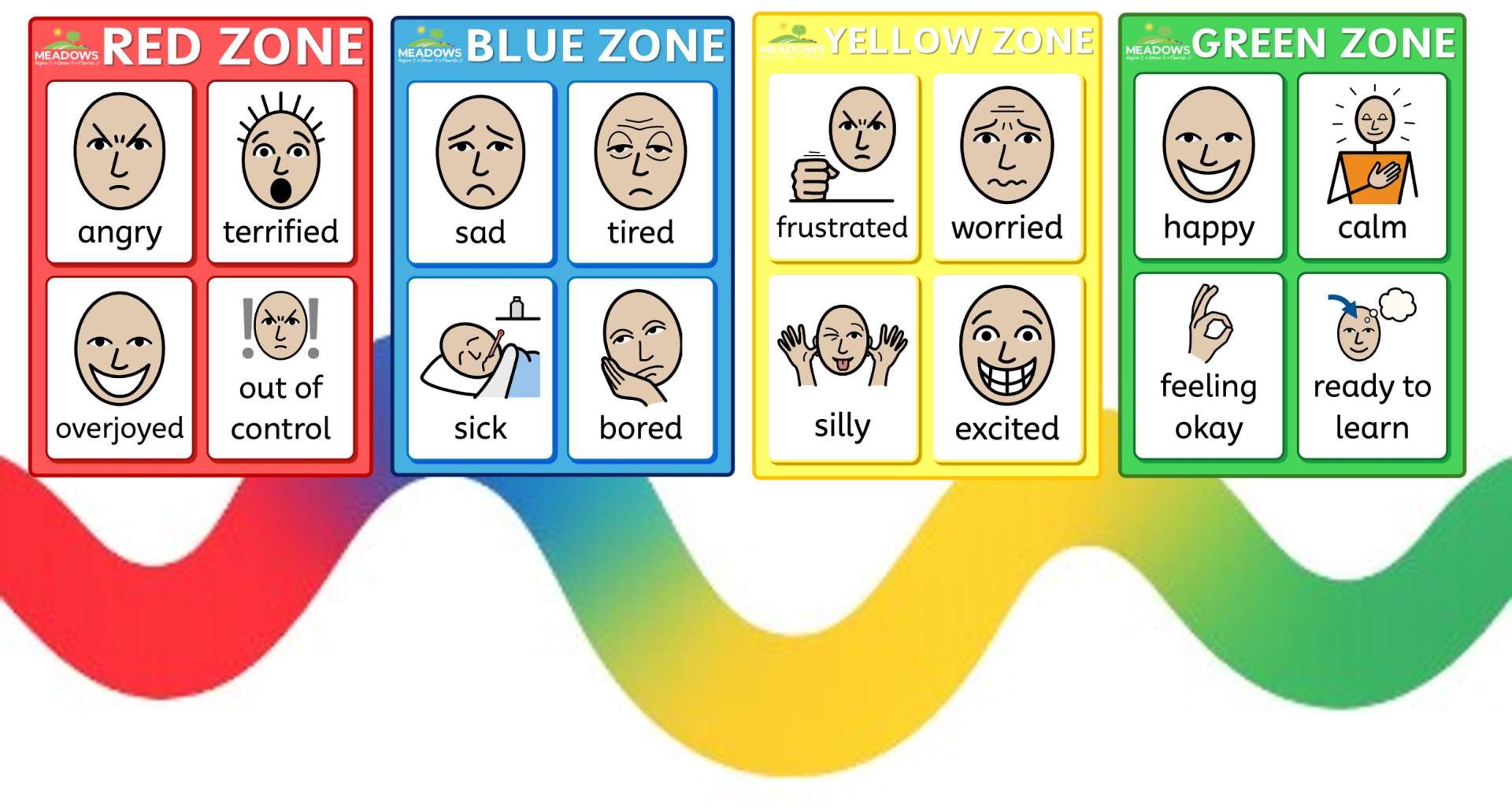
Blue Zone: The Blue Zone portrays negative feelings and low energy levels such as when someone feels bored, sad, tired, or unwell.
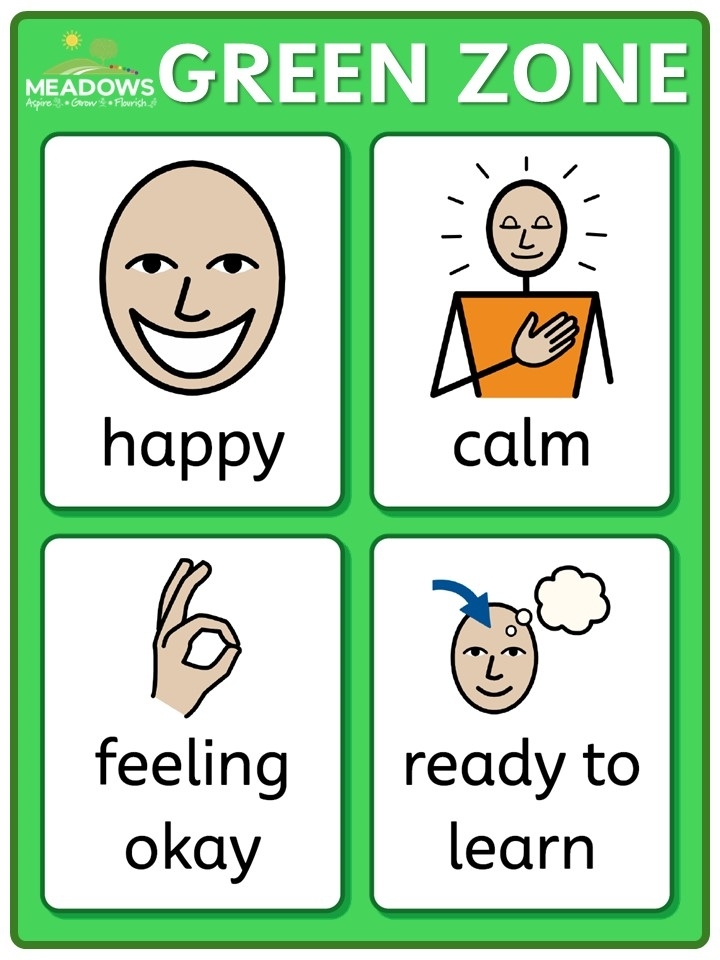
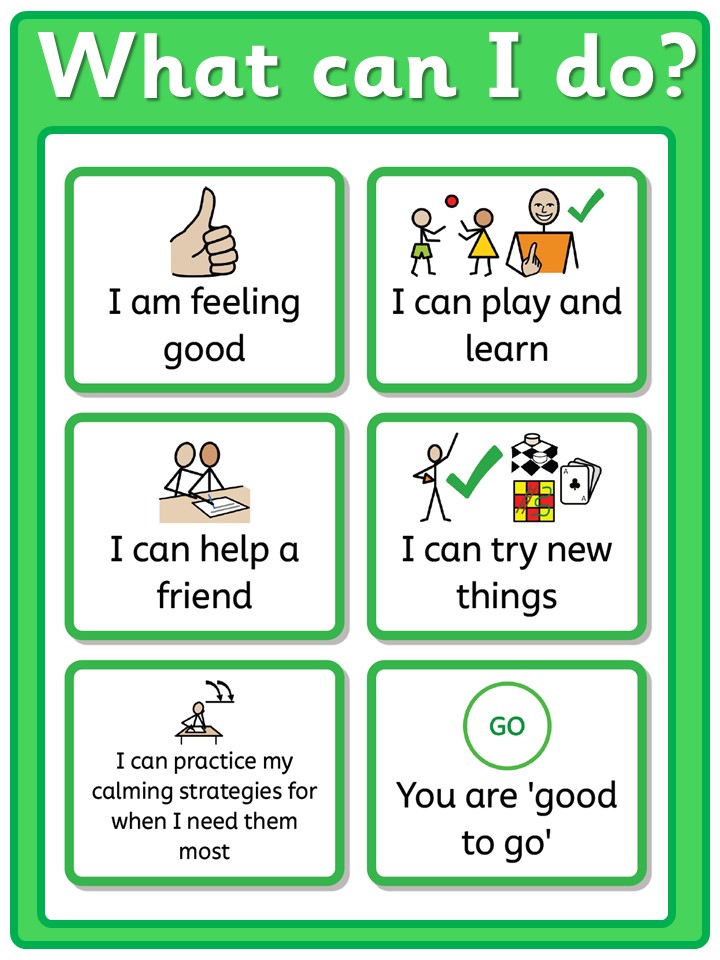
Green Zone: The Green Zone depicts calmness and the feeling of being in control. A person in the green zone may be described as content, focused or happy and certainly ready to learn.
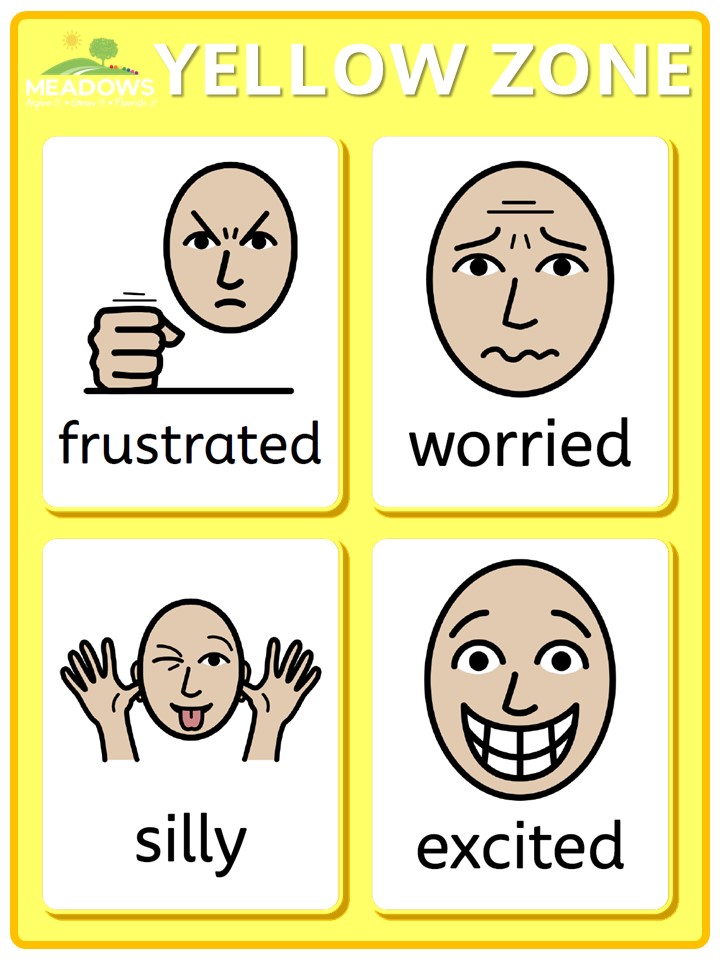
Yellow Zone: The Yellow Zone describes a person with additional levels of energy and elevated emotions, but remains in control. An individual may be facing nervousness, wiggles, silliness, excitement, anxiety, frustration or stress.
Red Zone: The Red Zone demonstrates strong emotions and extraordinarily high energy. A person is said to be in the red zone when they are feeling angry, elated, terrified, out of control, devastated or enraged.
Aims of using the Zones of Regulation at Meadows Primary School and Nursery:
- To help children identify which Zone they are in and how to best look after themselves in that Zone.
- To gain an increased vocabulary of emotional terms so pupils can explain how they are feeling – with consistent understanding across the school.
- To develop problem-solving skills.
- To identify a range of different calming and alerting strategies/tools that support them, allowing them to self-regulate.
Positive messages about using The Zones of Regulation:
- It is important to know that it's fine for children to experience all of these Zones.
- Children may be in more than one Zone at a time.
- There is no bad Zone, but it is important to learn and use strategies that help children take care of the Zones that they are in.
- Some emotions may fall into more than one Zone
Zones of Regulation
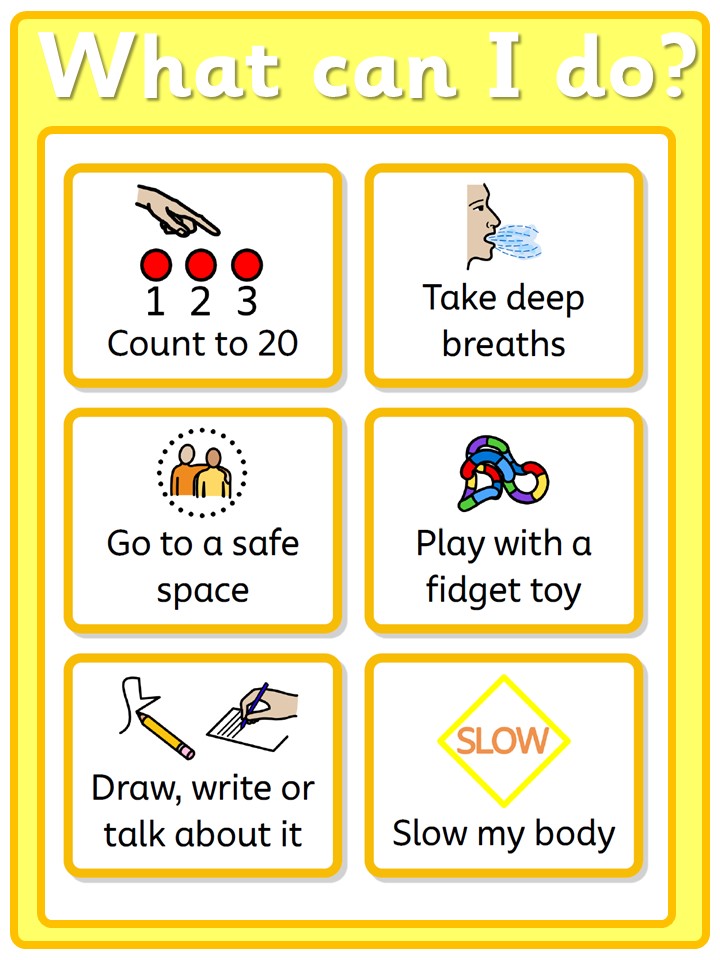
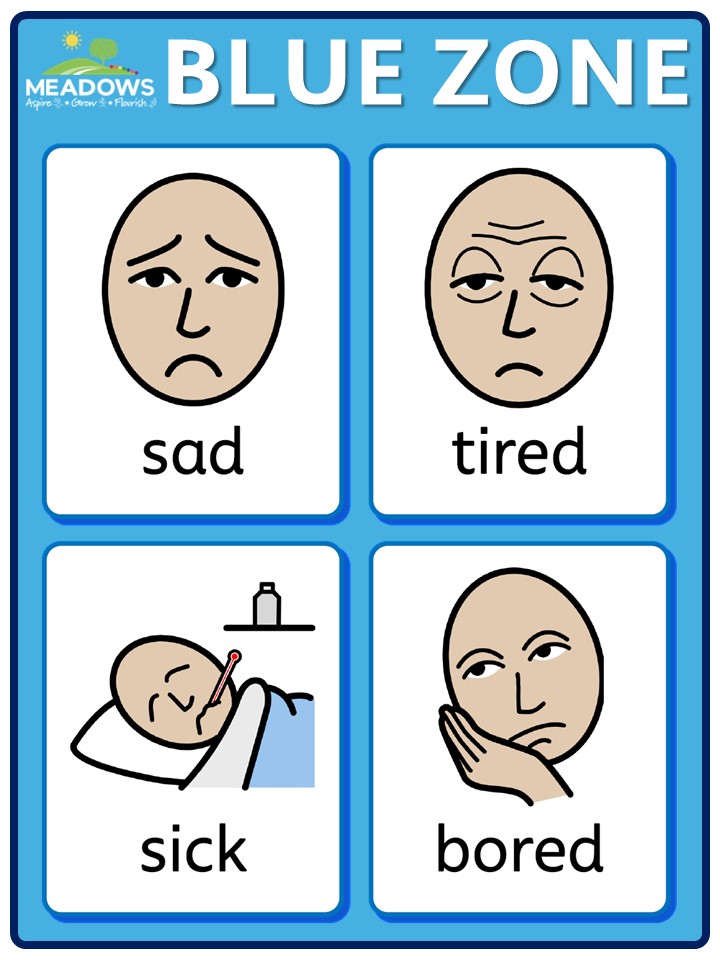
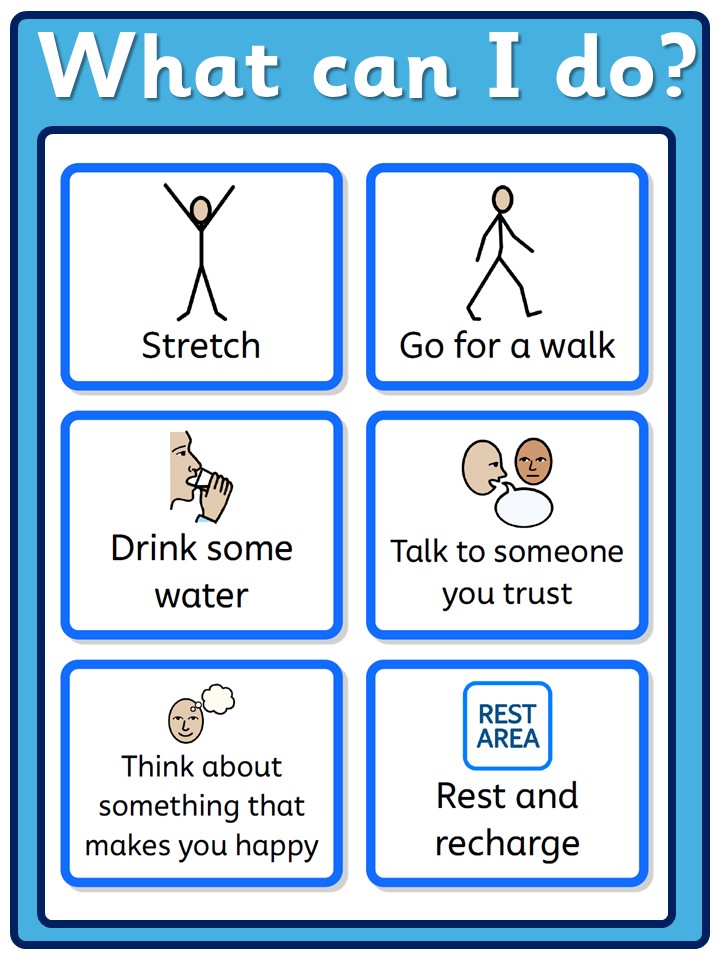
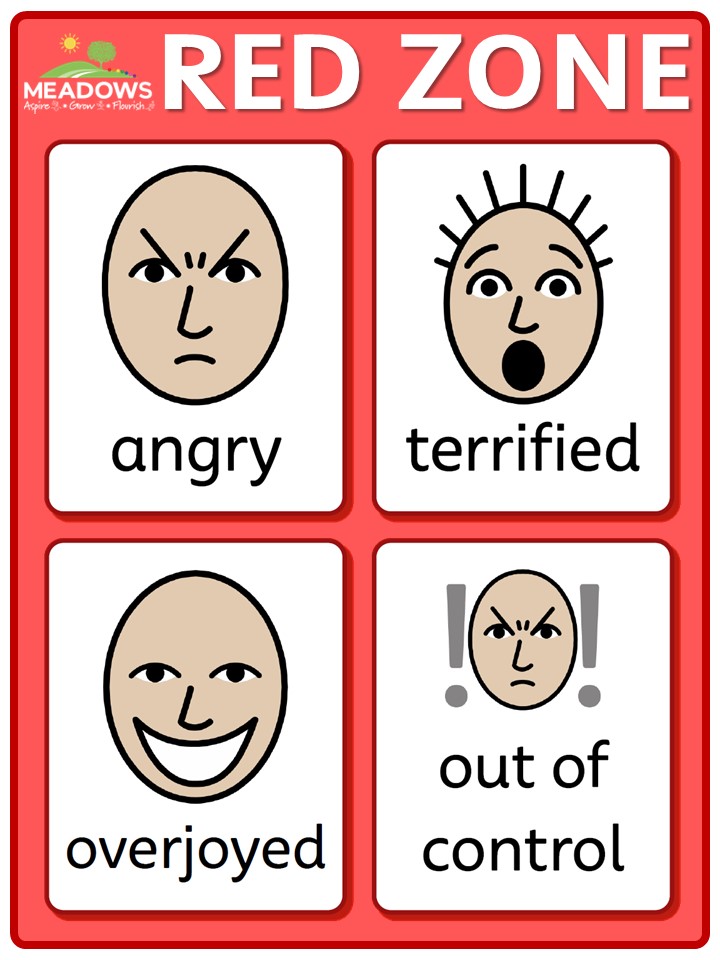
Regulation Stations:
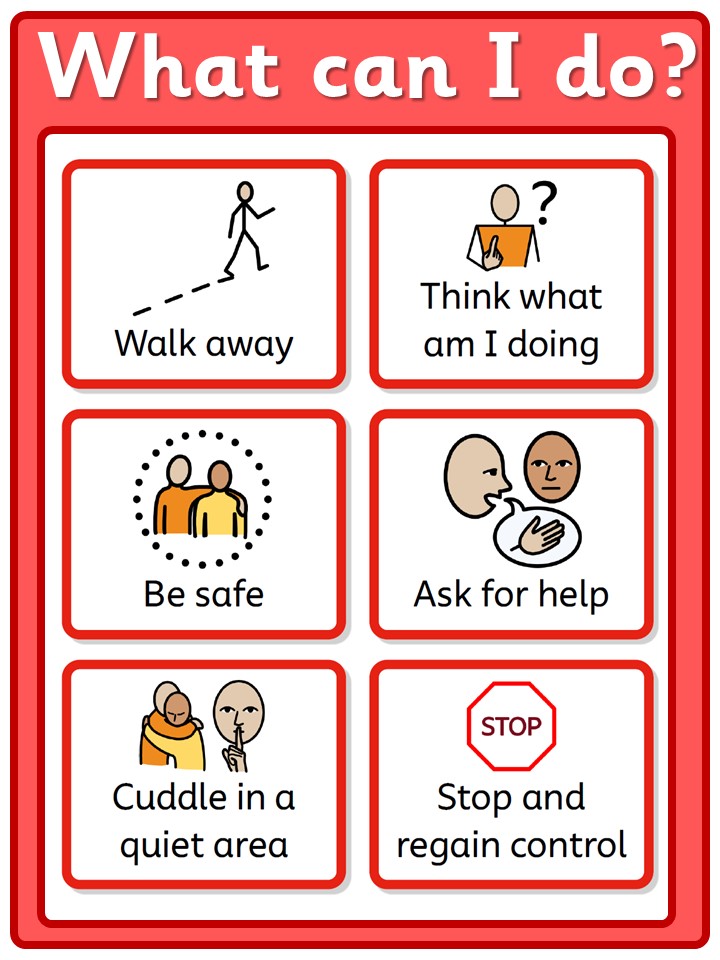
To compliment our zones of regulation, and further enhance children’s emotional wellbeing, each of our classrooms feature a regulation station. This dedicated space helps children recognise, understand, and manage their emotions, while remaining in the learning environment. It’s not a “time‑out” space — it’s a supportive, proactive tool that teaches lifelong self‑regulation skills.
Our Regulation Stations are great for:
🧠 1. Supporting Emotional Self‑Regulation
- Gives children a safe place to notice how they’re feeling.
- Helps them practise strategies to calm their bodies and minds.
- Encourages independence: “I can help myself feel better.”
🌱 2. Reducing Escalation
- Provides an early intervention before emotions become overwhelming.
- Helps children step away from triggers without leaving the learning environment.
- Prevents small frustrations from becoming bigger behaviour issues.
🎒 3. Building Emotional Literacy
- Offers visual prompts (emotion charts, breathing cards, “zones of regulation” tools) to help children name and understand their feelings.
- Encourages reflection: “What am I feeling? What do I need?”
🤲 4. Offering Sensory and Tactile Support
- Calm boxes, fidget tools, weighted items, soft textures, and breathing aids help children regulate through sensory input.
- Supports pupils with sensory processing needs, anxiety, ADHD, or autism — but is beneficial for all children.
🧩 5. Teaching Coping Strategies
Children learn and practise techniques such as:
- deep breathing
- grounding exercises
- positive self‑talk
- mindful movement
- using sensory tools appropriately
Over time, these strategies become internalised.
🏫 6. Creating a Classroom Culture of Wellbeing
- Normalises the idea that everyone needs a moment to reset sometimes.
- Promotes empathy and understanding among peers.
- Reinforces that emotional health is as important as academic learning.
Promoting Empathy and Inclusion:
For many of our children, being well regulated and ready to learn is an overwhelmingly consistent state. Similarly, their need to utilise regulation stations can be limited or none-existent. To ensure our children identify this as a strength, and to not feel concerned and/or envious about others who may benefit from this space, we explain that each child ‘needs different things to help them aspire, grow and flourish’ and that for them, the regulation station may not be necessary.
The Learning Power of Resilience:
Regular emotional check‑ins are an important part of helping children understand and express how they feel, but they work best when paired with opportunities to build resilience. Resilience is one of our Learning Powers and is the ability to cope with challenges, recover from setbacks, and keep going when things feel difficult.
In the Meadows curriculum, resilience is developed through:
- carefully structured experiences: encouraging pupils to try again after mistakes,
- modelling problem‑solving,
- teaching emotional vocabulary,
- opportunities to be challenged and go beyond their usual experiences or perceived limitations
- providing supportive routines that help children manage frustration or uncertainty
- a commitment to promotion and delivery of our school’s vision – aspire, grow, flourish!
By balancing emotional awareness with gentle, age‑appropriate challenge, we help children learn that feelings are valid and that they have the inner resources to navigate them. This combination strengthens wellbeing, confidence, and independence over time – enabling our children to truly aspire, grow and flourish!