


Our Curriculum Heroes
At Meadows, we proudly promote equality of opportunity and diversity effectively; human creativity and achievement through additional learning opportunities about famous figures (our Curriculum Heroes) and groups of people who have impacted positively within our world are highlight moments in our school curriculum.
These individuals creativity, commitment, courage and community inspire these learning moments and, through ensuring they themselves are diverse, we ensure that children can ‘see themselves’ throughout our curriculum.
Here are some of the heroes we learn about...
Ada Lovelace
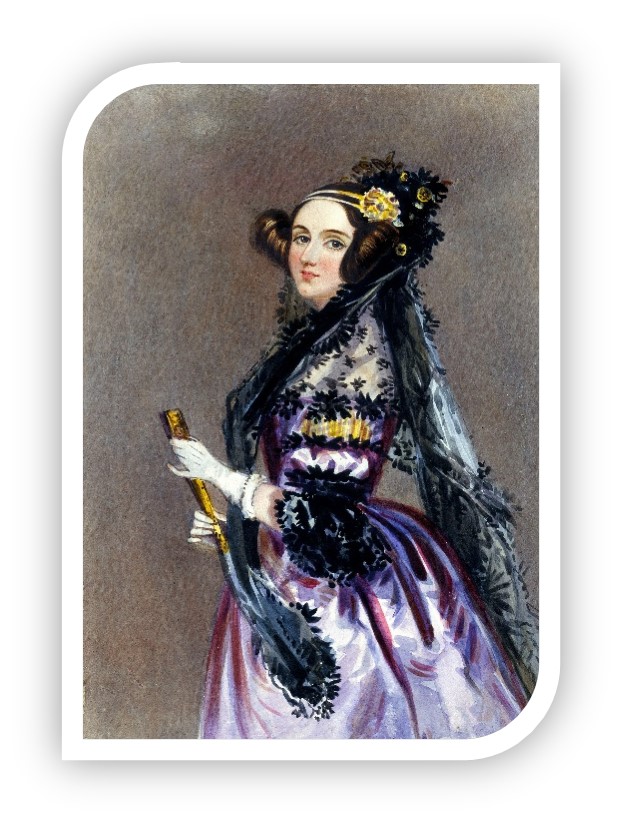 Who was she?
Ada Lovelace was an English mathematician and writer, best known for her work on Charles Babbage’s early mechanical computer designs. She is often considered the first computer programmer.
When was she alive?
She was born on December 10, 1815, and died on November 10, 1852.
Where was she from?
Ada Lovelace was from England.
What is she famous for?
She is famous for writing the first algorithm intended for a machine and for envisioning that computers could go beyond simple calculations to process symbols and even create music—concepts that underpin modern computing.
What are her biggest achievements?
- Collaborated with Charles Babbage on the Analytical Engine.
- Wrote detailed notes in 1843 that included the first published algorithm for a machine.
- Anticipated the idea of computer programming and symbolic processing long before computers existed.
- Inspired the naming of the U.S. Department of Defence programming language “Ada” in 1979.
A famous quote
"That brain of mine is something more than merely mortal, as time will show." — Ada Lovelace
Why is she still important today?
Ada Lovelace’s visionary ideas laid the foundation for modern computer science. Her belief that machines could manipulate symbols and create beyond numbers predicted the versatility of today’s computers. She remains a symbol of innovation and a role model for women in STEM.
Harold Bride
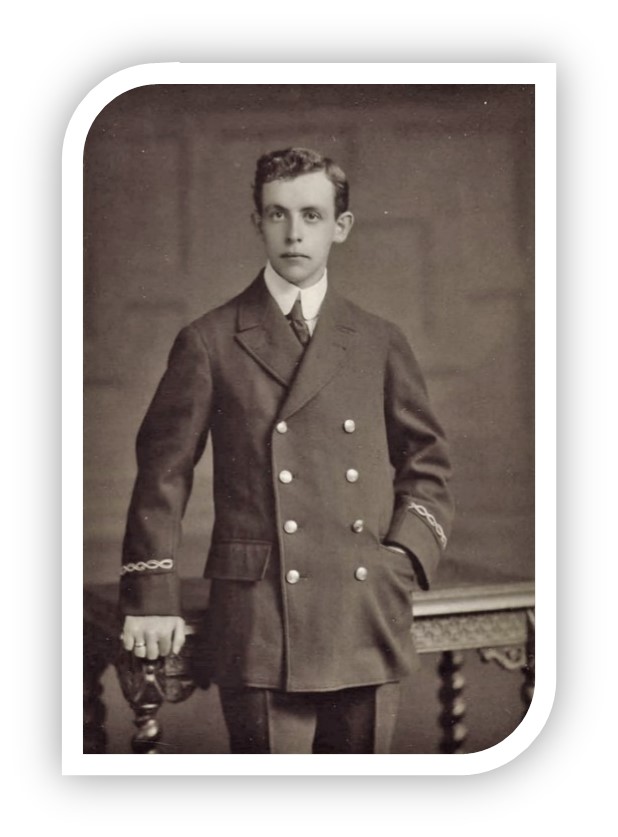
Who was he?
Harold Sydney Bride was a British Marconi wireless operator and one of the two radio officers aboard the RMS Titanic. He played a crucial role in sending distress signals during the ship’s sinking.
When was he alive?
He was born on January 11, 1890, and died on April 29, 1956, aged 66.
Where was he from?
Bride was from Nunhead, South London, England.
What is he famous for?
He is best known for helping send the Titanic’s distress calls (CQD and SOS) during the disaster and surviving the sinking, despite severe injuries.
What are his biggest achievements?
- Completed Marconi wireless training in 1911 and served on several ships before joining Titanic.
- Worked tirelessly with Jack Phillips to send distress signals, including the first SOS messages ever used in a major disaster.
- Survived the sinking and assisted in sending survivor lists aboard the rescue ship Carpathia.
- Continued his career as a wireless operator and later served during World War I.
A famous quote
"Send SOS," I said. "It's the new call, and it may be your last chance to send it." — Harold Bride, during the Titanic disaster.
Why is he still important today?
Harold Bride’s actions highlight the importance of wireless communication in maritime safety. His bravery and technical skill under extreme conditions helped save lives and influenced the development of emergency communication protocols still used today.
Molly Brown
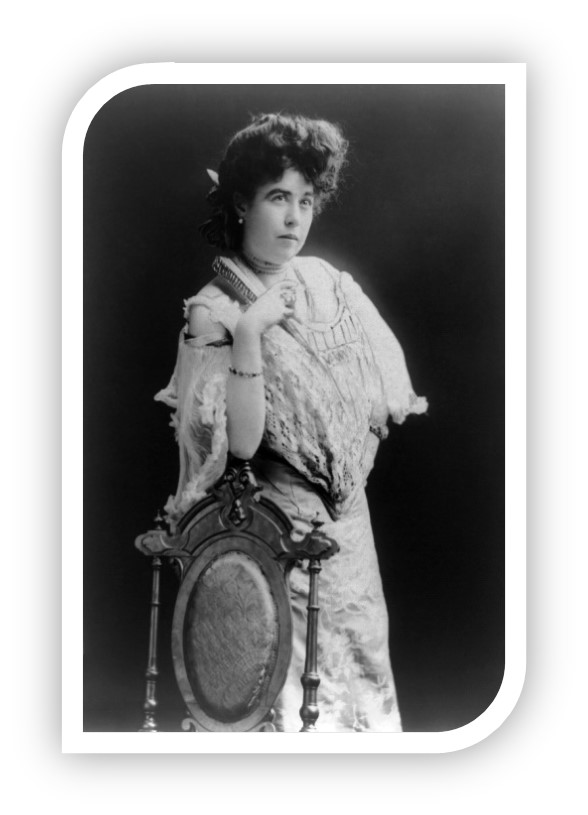 Who was she?
Margaret Tobin Brown, famously known as “Molly Brown,” was an American socialite, philanthropist, and activist. She became legendary for her courage and leadership during and after the Titanic disaster.
When was she alive?
She was born on July 18, 1867, and died on October 26, 1932.
Where was she from?
Molly Brown was born in Hannibal, Missouri, USA, and later lived in Leadville and Denver, Colorado.
What is she famous for?
She is best known as the “Unsinkable Molly Brown” for her heroic efforts during the Titanic tragedy—helping others into lifeboats, rowing Lifeboat No. 6, and organising aid for survivors aboard the Carpathia and in New York.
What are her biggest achievements?
- Advocated for women’s suffrage, education, and labour rights.
- Helped establish the first Juvenile Court in the U.S. and raised funds for hospitals and churches.
- Organized relief efforts for Titanic survivors and chaired the Survivor’s Committee, raising nearly $10,000.
- Worked with the American Committee for Devastated France during WWI and was awarded the French Legion of Honor in 1932.
- Ran for the U.S. Senate eight years before women had the right to vote.
A famous quote
"Thanks for the kind thoughts. Water was fine and swimming good. Neptune was exceedingly kind to me and I am now high and dry." — Molly Brown, in a humorous telegram after surviving the Titanic.
Why is she still important today?
Molly Brown remains an enduring symbol of resilience, courage, and advocacy. Her humanitarian work, fight for women’s rights, and leadership during crises continue to inspire generations, making her a cultural icon beyond the Titanic story.
Pocahontas
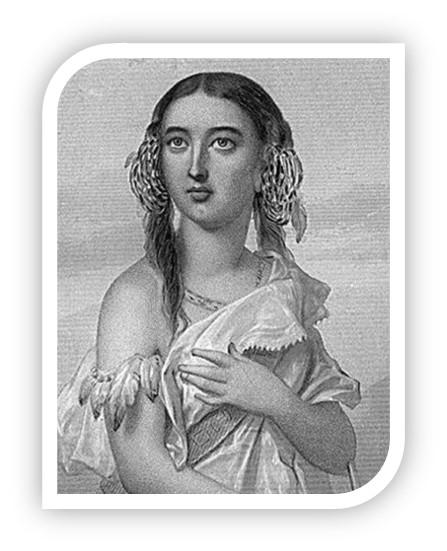 Who was she?
Pocahontas was a Native American woman from the Powhatan tribe who became an important figure in early American history for her role in fostering peace between Indigenous peoples and English settlers at Jamestown.
When was she alive?
She was born around 1595 and died in March 1617.
Where was she from?
Pocahontas was from the Powhatan Confederacy in what is now Virginia, USA.
What is she famous for?
She is best known for her association with the Jamestown colony and the story—possibly legendary—of saving Englishman John Smith’s life. She later married English settler John Rolfe, which helped establish a period of peace between the Powhatan people and the colonists.
What are her biggest achievements?
- Helped supply food to English settlers during times of shortage.
- Warned colonists of potential attacks, aiding their survival.
- Her marriage to John Rolfe in 1614 led to eight years of peace between Native Americans and English settlers.
- Served as a cultural bridge between two worlds during a critical period in American history.
A famous quote
While no direct quotes from Pocahontas survive, her legacy is often summarized by her symbolic role as a peacemaker and cultural ambassador.
Why is she still important today?
Pocahontas remains a significant historical figure because she symbolizes early contact and diplomacy between Native Americans and Europeans. Her story—though often romanticized—highlights themes of cultural exchange, survival, and the complex history of colonization in North America.
Ragnar Lothbrok
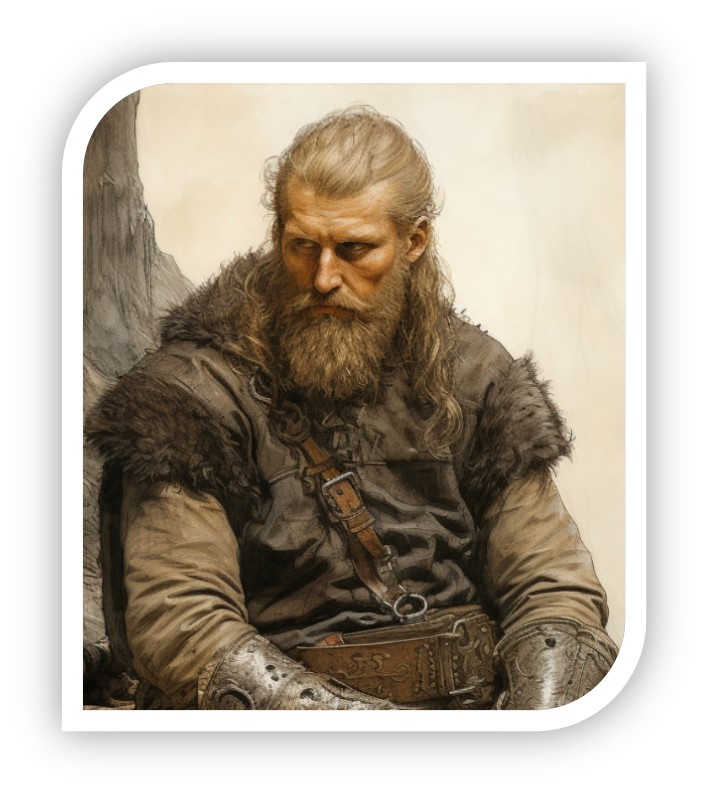 Who was he?
Ragnar Lothbrok was a legendary Viking warrior and chieftain whose life and exploits became famous in medieval European literature and Norse sagas. His story blends history and myth, making him one of the most iconic figures of the Viking Age.
When was he alive?
He is believed to have flourished during the 9th century (around 801–900).
Where was he from?
Ragnar was associated with Scandinavia, particularly Denmark and Norway, though his legendary raids extended across England and France.
What is he famous for?
Ragnar is best known for his daring raids on European kingdoms, his legendary battles, and his dramatic death—being thrown into a snake pit by King Aella of Northumbria, according to saga tradition. He is also remembered as the father of famous Viking leaders like Ivar the Boneless, Ubbe, and Halfdan.
What are his biggest achievements?
- Led raids across England and France, inspiring fear and shaping Viking history.
- Became a central figure in Norse sagas such as Ragnars saga loðbrókar and historical works like Gesta Danorum.
- His sons launched the Great Heathen Army in 865, a major Viking invasion of England, possibly to avenge his death.
- His legend influenced centuries of literature and modern media, including novels and the TV series Vikings.
A famous quote
While no verified historical quotes exist, the Icelandic poem Krákumál attributes to Ragnar a defiant speech before his death:
"How the little pigs would grunt if they knew how the old boar suffers." — Ragnar Lothbrok (legendary quote from saga tradition).
Why is he still important today?
Ragnar Lothbrok remains a cultural icon representing Viking courage, exploration, and resilience. His story continues to inspire books, films, and TV series, shaping popular perceptions of Viking history and mythology.
Sir Ranulph Fiennes
 Who was he?
Sir Ranulph Twisleton-Wykeham-Fiennes is a British adventurer, polar explorer, and author, widely regarded as one of the greatest living explorers. He has led some of the most challenging expeditions in modern history.
When was he alive?
He was born on March 7, 1944, and is still alive today (age 81).
Where was he from?
Fiennes was born in Windsor, Berkshire, England, and spent part of his childhood in South Africa before returning to England.
What is he famous for?
He is best known for leading the Transglobe Expedition (1979–1982), the first north-south surface circumnavigation of the Earth along its meridian, and for numerous record-breaking polar journeys and extreme endurance feats.
What are his biggest achievements?
- Led the Transglobe Expedition, traveling 52,000 miles over three years and crossing both poles.
- Completed the longest unsupported polar journey across Antarctica (1992–93) with Mike Stroud.
- Ran seven marathons on seven continents in seven days in 2003, just months after heart surgery.
- Became the oldest Briton to summit Mount Everest in 2009 at age 65.
- Discovered the lost city of Ubar in Oman (1991).
- Authored numerous best-selling books and raised millions for charity.
- Awarded the Order of the British Empire (OBE) and the Polar Medal (twice).
A famous quote
"There is, of course, never any point in cryinh over spilt milk- the key is to learn from failures and then keep going." — Sir Ranulph Fiennes
Why is he still important today?
Fiennes remains an inspirational figure for his extraordinary resilience, daring expeditions, and charitable work. His achievements push the boundaries of human endurance and continue to motivate adventurers and explorers worldwide.
Winston Churchill
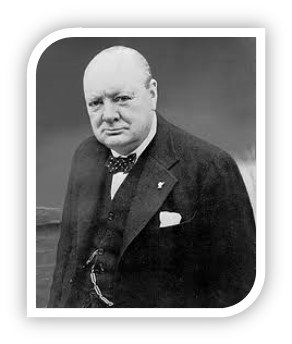 Who was he?
Sir Winston Churchill was a British statesman, writer, and orator who served twice as Prime Minister of the United Kingdom. He is best remembered for his leadership during World War II and his role in defending democracy against Nazi Germany.
When was he alive?
Churchill was born on November 30, 1874, and died on January 24, 1965, aged 90.
Where was he from?
He was born at Blenheim Palace, Oxfordshire, England, into the aristocratic Spencer-Churchill family.
What is he famous for?
Churchill is most famous for leading Britain through World War II (1940–1945), delivering inspiring speeches, and forging alliances that contributed to the Allied victory. He was also a prolific writer and won the Nobel Prize in Literature in 1953.
What are his biggest achievements?
- Served as Prime Minister during WWII (1940–1945) and again from 1951–1955.
- Delivered iconic speeches such as “We shall fight on the beaches” and “Their finest hour.”
- Played a key role in forming the Allied strategy with Roosevelt and Stalin.
- Won the Nobel Prize in Literature for his historical writings and speeches.
- Planned and received a State Funeral, one of only four British Prime Ministers to do so.
A famous quote
"Success is not final, failure is not fatal: it is the courage to continue that counts." — Winston Churchill.
Why is he still important today?
Churchill remains a symbol of resilience, leadership, and eloquence. His wartime decisions and speeches continue to inspire leaders and citizens worldwide. He is also remembered for shaping modern British politics and contributing to global history during one of its most critical periods.
Hatshepsut
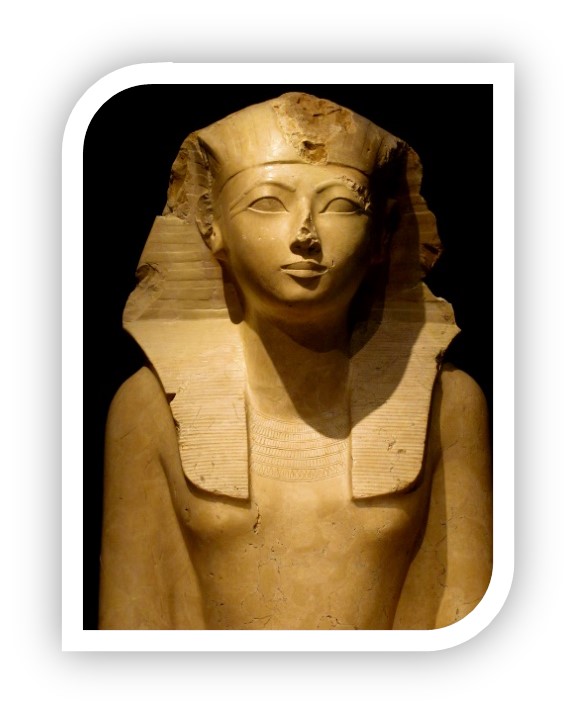 Who was she?
Hatshepsut was one of ancient Egypt’s few female pharaohs and is considered one of its greatest rulers. She proved that women could hold supreme power in a society traditionally dominated by men.
When was she alive?
She was born around 1504 B.C. and died in 1458 B.C..
Where was she from?
Hatshepsut was from Egypt, ruling from Thebes as part of the 18th Dynasty.
What is she famous for?
She is famous for becoming pharaoh during a time when women rarely ruled, and for bringing wealth, stability, and monumental architecture to Egypt. Her reign marked a high point in Egyptian art and trade.
What are her biggest achievements?
- Became co-ruler with Thutmose III and later declared herself pharaoh.
- Sponsored a major trading expedition to Punt, bringing back gold, ebony, and incense.
- Commissioned grand architectural projects, including the Temple of Deir el-Bahri and towering obelisks at Karnak.
- Maintained peace and prosperity during her reign, strengthening Egypt’s economy and culture.
A famous quote
While no direct quotes survive, inscriptions often referred to her as “His Majesty, Herself”, emphasizing her unique position as a female pharaoh.
Why is she still important today?
Hatshepsut remains a symbol of female leadership and innovation. Her successful reign challenged gender norms of her time and left behind architectural wonders that continue to inspire historians and archaeologists.
Lindow Man
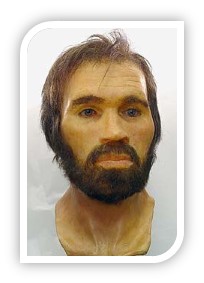 Who was he?
Lindow Man is the well-preserved body of a man discovered in 1984 in a peat bog at Lindow Moss, Cheshire, England. He is one of the most significant archaeological finds in Britain and provides insight into life and death during the Iron Age or early Roman period.
When was he alive?
He lived sometime between 2 B.C. and 119 A.D., during the Iron Age or Romano-British period.
Where was he from?
Lindow Man was found in Lindow Moss, near Wilmslow in Cheshire, North West England.
What is he famous for?
He is famous for being Britain’s best-preserved bog body, offering rare evidence of ancient rituals, diet, and social status. His discovery sparked renewed interest in British bog bodies and Iron Age archaeology.
What are his biggest achievements?
While Lindow Man’s life achievements remain unknown, his preserved remains have contributed greatly to archaeology by revealing:
- He was a healthy male in his mid-20s, likely of high status.
- His last meal included cereals and mistletoe pollen, suggesting ritual significance.
- His death was violent, possibly a ritual sacrifice, involving blows to the head and a broken neck.
- His body’s preservation in the bog allowed detailed study of Iron Age life.
A famous quote
Lindow Man left no words, but his story is often summarized by archaeologists as “a window into Britain’s prehistoric past.”
Why is he still important today?
Lindow Man remains crucial for understanding Iron Age society, ritual practices, and ancient diets. His discovery advanced archaeological techniques and continues to fascinate historians and the public as a tangible link to Britain’s distant past.
Florence Nightingale
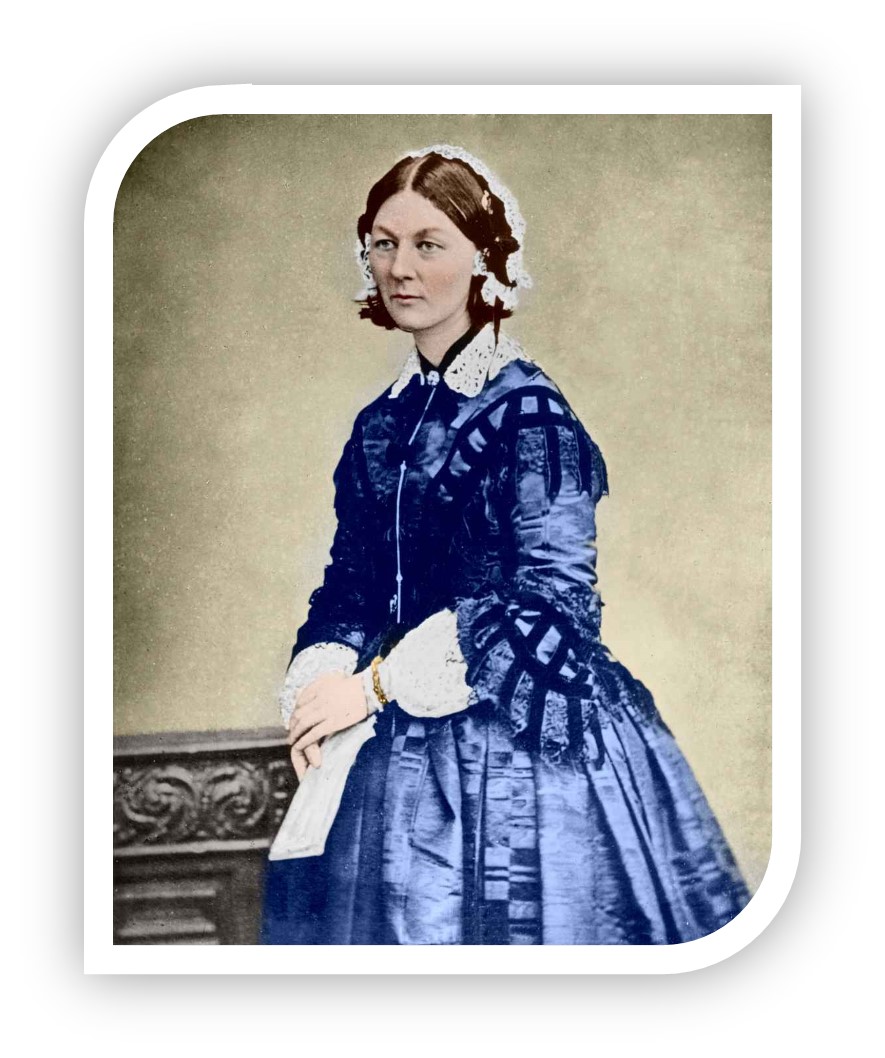 Who was she?
Florence Nightingale was a British nurse, social reformer, and statistician who is widely regarded as the founder of modern nursing. She transformed healthcare practices and made nursing a respected profession.
When was she alive?
She was born on 12 May 1820 and died on 13 August 1910.
Where was she from?
Florence was born in Florence, Italy, but lived most of her life in England, UK.
What is she famous for?
She is best known for her work during the Crimean War, where she improved sanitary conditions in military hospitals and drastically reduced death rates. She became known as “The Lady with the Lamp” for her nightly rounds caring for soldiers.
What are her biggest achievements?
- Led a team of nurses during the Crimean War, improving hygiene and reducing mortality.
- Founded the Nightingale Training School for Nurses in 1860, making nursing a respected and professional career.
- Advocated for hospital reform and public health improvements in Britain and India.
- First woman to receive the Order of Merit in 1907.
- Pioneered the use of statistics in healthcare, influencing policy and medical practices.
A famous quote
"I attribute my success to this: I never gave or took any excuse." — Florence Nightingale.
Why is she still important today?
Florence Nightingale revolutionized nursing and healthcare, setting standards for hygiene, patient care, and professional training that remain central today. Her legacy continues to inspire nurses and healthcare workers worldwide.
Mary Seacole
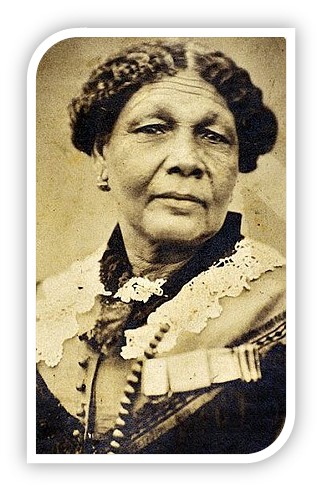 Who was she?
Mary Seacole was a British-Jamaican nurse, healer, and businesswoman who became famous for her work caring for soldiers during the Crimean War. She is celebrated as a pioneering figure in nursing and for her courage and compassion.
When was she alive?
She was born in 1805 and died on 14 May 1881.
Where was she from?
Mary was born in Kingston, Jamaica, and later travelled widely, including to England and the Crimea.
What is she famous for?
She is best known for setting up the “British Hotel” near the front lines during the Crimean War, where she provided food, medicine, and care for sick and wounded soldiers. Despite facing racial prejudice, she became beloved by the troops for her kindness and bravery.
What are her biggest achievements?
-
Established the British Hotel during the Crimean War to support soldiers with food, shelter, and medical care.
-
Treated soldiers on the battlefield, often under dangerous conditions.
-
Published her autobiography, Wonderful Adventures of Mrs Seacole in Many Lands (1857), one of the earliest by a Black woman in Britain.
-
Overcame racial discrimination to make a lasting impact on nursing and humanitarian work.
-
Honoured posthumously with numerous memorials and awards recognising her contributions.
A famous quote
“I was never weary of being useful.” — Mary Seacole.
Why is she still important today?
Mary Seacole is remembered as a trailblazer who broke barriers of race and gender in healthcare. Her resilience and dedication to caring for others continue to inspire nurses and advocates for equality worldwide.